

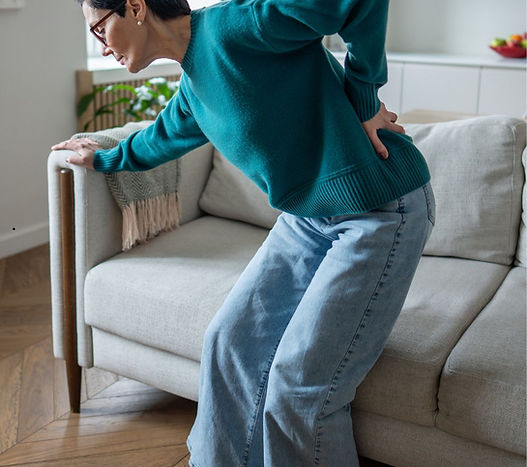
Spine and Disc Injuries
Spine & Disc Injuries
Chiropractic, Spinal Decompression & Rehabilitation for Spine and Disc Problems
Back pain, neck pain, or a disc problem keeping you from doing what you love?
Your spine is involved in almost everything you do.
Walking. Sitting. Working. Exercising. Driving. Sleeping. Bending. Lifting. Playing with your kids.
When something goes wrong with your spine or one of the discs between your vertebrae, even simple movements can become uncomfortable.
At Shakley Chiropractic, we provide personalized chiropractic, spinal decompression therapy, and rehabilitation care for patients experiencing spine and disc-related problems at our Annapolis and Salisbury, Maryland offices.
Our approach is not based on treating an MRI or giving every patient the same treatment.
We start by understanding you, your symptoms, your movement, and your goals.
What Is a Spine or Disc Injury?
The spine is a complex structure made up of vertebrae, discs, joints, muscles, ligaments, nerves, and other tissues.
Problems involving any of these structures can contribute to pain, stiffness, reduced mobility, or changes in how you move.
Spine and disc problems may develop after:
-
A car accident
-
Sports injury
-
Fall
-
Heavy lifting
-
Repetitive activity
-
Sudden twisting or bending
-
Changes in activity or training
-
Normal age-related changes
-
Other physical stresses
Sometimes there is an obvious event that starts the pain.
Other times, symptoms gradually develop without one specific injury.
Common Spine & Disc Conditions
Lower Back Pain
Low back pain can make sitting, standing, walking, bending, lifting, exercising, and working difficult.
Neck Pain
Neck problems can affect your ability to turn your head, work at a computer, drive, exercise, or sleep comfortably.
Herniated Discs
A herniated disc occurs when material from an intervertebral disc extends beyond its normal boundaries.
A herniated disc can sometimes be associated with localized pain or symptoms traveling into an arm or leg.
Bulging Discs
A bulging disc occurs when the disc extends beyond its usual boundaries.
Importantly, a bulging disc seen on imaging does not automatically mean it is the source of your pain.
The imaging findings need to be considered together with your symptoms and examination.
Degenerative Disc Changes
Disc changes can occur as part of the normal aging process.
Some people have significant degenerative changes without significant symptoms, while others may experience pain or stiffness.
Sciatica
Sciatica generally refers to pain or other symptoms traveling along the path of the sciatic nerve.
Symptoms may include:
-
Buttock pain
-
Leg pain
-
Tingling
-
Numbness
-
Changes in sensation
Radiating Pain
Some spine-related conditions can produce symptoms that extend away from the spine and into an arm, shoulder, buttock, or leg.
Symptoms of Spine & Disc Problems
Spine and disc problems can look different from one person to another.
You may experience:
-
Back pain
-
Neck pain
-
Stiffness
-
Muscle tightness
-
Pain when bending
-
Pain when sitting
-
Pain when standing
-
Pain with lifting
-
Reduced range of motion
-
Pain traveling into an arm or leg
-
Numbness
-
Tingling
-
Difficulty performing normal activities
You may also notice that certain positions or movements consistently make your symptoms better or worse.
Understanding those patterns can be an important part of your evaluation.
Why Does a Disc Problem Cause Pain?
The discs between the vertebrae help provide spacing and movement between the bones of the spine.
When a disc changes, several different things may potentially contribute to symptoms.
However, an important point is that not every disc abnormality causes pain.
This is why an MRI report alone isn't enough to determine what's wrong.
A herniated disc diagnosis does not automatically mean you need surgery. Mayo Clinic explains that many people have herniated discs without symptoms, while others experience arm or leg pain, numbness, or weakness when a nearby nerve is affected. The American Academy of Orthopaedic Surgeons notes that treatment for a lumbar herniated disc usually begins with nonsurgical options. At Shakley Chiropractic & Wellness Center in Salisbury and Annapolis, MD, we consider your examination, symptoms, and available imaging together to determine which care options fit your needs.
We want to understand the entire picture:
What does your imaging show?
What symptoms are you experiencing?
When did they begin?
What movements affect them?
What does your physical examination show?
How is the problem affecting your life?
Taking the time to really listen to a patient helps determine the best course of care to resolve their problems as fast as possible.
Spinal Decompression Therapy
A Non-Surgical Approach for Certain Spine & Disc Problems
For some patients with back pain, neck pain, or disc-related symptoms, spinal decompression therapy may be considered as part of a conservative treatment plan.
Spinal decompression uses a specialized table and controlled mechanical movement to apply carefully directed forces to the spine.
Depending on the individual and the system being used, treatment may involve controlled cycles of spinal distraction and relaxation.
The goal is to provide a controlled approach to spinal movement and loading.
Spinal decompression may be considered for patients experiencing:
-
Certain types of low back pain
-
Certain types of neck pain
-
Disc-related symptoms
-
Sciatica
-
Radiating symptoms
-
Spinal stiffness
However, spinal decompression is not appropriate for every patient or every spinal condition.
That's why we don't simply see the words "herniated disc" on an MRI and automatically recommend decompression.
We first evaluate your condition.
What Does Spinal Decompression Feel Like?
Patients can experience decompression differently.
Many people describe the treatment as a gentle stretching, pulling, or unloading sensation through the spine.
Treatment is performed within your tolerance, and your response is monitored.
Your treatment parameters may be adjusted based on:
-
Your symptoms
-
Your condition
-
The area being treated
-
Your tolerance
-
Your response to treatment
-
Your goals
Spinal Decompression Is Usually Part of a Bigger Picture
We don't view spinal decompression as a stand-alone solution for every spine problem.
When appropriate, it can be used independently or most often, incorporated into a broader rehabilitation program.
Your care may include a combination of:
Spinal Decompression
Controlled mechanical movement and distraction of the spine.
Chiropractic Care
Specific chiropractic techniques may be used when appropriate for your condition.
Exercise Therapy
Exercises may be incorporated to improve strength, mobility, control, and function.
Functional Movement Assessment
Understanding how you move can provide additional information about your symptoms and limitations.
Myofascial & Trigger-Point Approaches
Soft-tissue techniques may be incorporated when appropriate.
Movement Education
Understanding how to move and modify activities can be an important part of rehabilitation.
The combination is individualized.
Not every patient needs every treatment.
Chiropractic Care for Spine & Disc Problems
Chiropractic care can be one component of a conservative approach to certain spine-related conditions.
Depending on your condition, treatment may focus on improving spinal or joint mobility, addressing musculoskeletal restrictions, and helping you move more comfortably.
Recovery also involves rebuilding your ability to move comfortably. The NHS recommends gradually returning to gentle exercise as tolerated, while the American Academy of Orthopaedic Surgeons describes targeted exercises to strengthen the lower back and abdominal muscles as part of conservative treatment. Our individualized rehabilitation plans focus on improving strength, mobility, and tolerance for everyday activities. Whether your goal is sitting through the workday, lifting more comfortably, or returning to exercise, we help you work toward it with guidance based on your condition and response to care.
The appropriate technique depends on the individual.
Our goal is not to force a particular treatment onto every patient.
It's to determine what approach makes sense for your condition.
Rehabilitation Matters
Feeling better is important.
But getting back to normal activity is often the bigger goal.
Rehabilitation may focus on helping you improve:
-
Strength
-
Mobility
-
Stability
-
Movement control
-
Tolerance to activity
-
Functional movement
Depending on your condition, exercises may be incorporated into your care to help you work toward your individual goals.
What If You Have an MRI?
If you've already had an MRI, bring your imaging report and relevant medical records when available.
An MRI can provide valuable information about the structures of your spine.
But an imaging finding doesn't automatically explain your symptoms.
For example, disc bulges and degenerative changes can be found in people who don't experience significant pain.
That's why we consider imaging alongside your history, symptoms, examination, and functional limitations.
We treat the patient—not just the MRI.
When Spine Pain Affects Your Life
A spine problem can change more than your pain level.
You might stop:
-
Exercising
-
Running
-
Lifting weights
-
Playing sports
-
Golfing
-
Working comfortably
-
Sitting at your desk
-
Driving long distances
-
Playing with your children
-
Sleeping normally
You may start avoiding movements because you're afraid they'll make things worse.
Our goal is to help you understand what you're dealing with and determine whether conservative chiropractic and rehabilitation care is appropriate.
What Happens at Your First Visits
1. We Listen
We'll discuss:
-
Your symptoms
-
How they started
-
How long you've had them
-
What makes them better or worse
-
Your previous injuries
-
Your activities
-
Your medical history
-
Your goals
2. We Evaluate
We'll perform an appropriate examination based on your symptoms.
This may include assessing:
-
Range of motion
-
Musculoskeletal function
-
Movement
-
Areas of tenderness
-
Neurological findings when appropriate
-
Other relevant clinical findings
3. We Explain
We'll explain what we're finding in straightforward language.
If you have imaging, we'll consider the available information in context.
4. We Develop a Plan
If chiropractic care, spinal decompression, rehabilitation, or a combination of approaches is appropriate, we'll discuss your options.
If we believe you need another type of medical evaluation, we'll tell you.
Who May Benefit From Conservative Spine Care?
People seek care for spine and disc problems at many different stages.
You may be:
-
Dealing with new back pain
-
Recovering from an injury
-
Experiencing chronic back pain
-
Dealing with recurring symptoms
-
Living with a diagnosed disc problem
-
Experiencing sciatica
-
Trying to avoid unnecessary disruption to your daily life
-
Looking for non-surgical treatment options
The important question isn't simply whether you have a particular diagnosis.
It's whether the treatment is appropriate for your specific condition.
Don't Let Back or Neck Pain Become Your New Normal
It's easy to adapt to chronic discomfort.
You sit differently.
You stop exercising.
You avoid lifting.
You sleep in a particular position.
You take fewer walks.
You stop doing things you enjoy.
But if pain or stiffness continues to limit your life, you don't necessarily have to simply accept it as your new normal.
An evaluation can help you understand what's happening and what options may be available.
Spine & Disc Care in Annapolis & Salisbury
Shakley Chiropractic provides personalized chiropractic, spinal decompression, and rehabilitation services at two Maryland locations.
Annapolis, MD
Our Annapolis office serves patients throughout Annapolis and surrounding Anne Arundel County communities.
Salisbury, MD
Our Salisbury office serves patients throughout Salisbury and surrounding Eastern Shore communities.
Dr. Ryan Shakley has a longstanding connection to the Eastern Shore. He grew up in the area, attended Salisbury University, and spent nearly seven years practicing locally before establishing Shakley Chiropractic.
Why Choose Shakley Chiropractic?
Personalized Care
Your symptoms, condition, lifestyle, and goals are different from everyone else's.
Chiropractic + Spinal Decompression + Physical Therapy Rehabilitation
When appropriate, we can incorporate multiple conservative approaches into an individualized plan.
Movement-Focused
We consider how your spine and musculoskeletal system function—not simply what appears on an imaging report.
Clear Communication
We want you to understand what we're finding and why we're recommending a particular approach.
Two Maryland Locations
Choose the Shakley Chiropractic location that's most convenient for you.
Frequently Asked Questions
Can a chiropractor help with a herniated disc?
Depending on your condition, chiropractic and rehabilitation care may be appropriate. An evaluation is necessary to determine whether chiropractic care is appropriate for you.
What is spinal decompression therapy?
Spinal decompression therapy is a non-surgical treatment approach that uses controlled mechanical movement and distraction of the spine.
Can spinal decompression help a bulging disc?
Some patients with disc-related symptoms may be candidates for spinal decompression. Whether it is appropriate depends on the individual's symptoms, examination, and overall condition.
Can spinal decompression help sciatica?
Sciatica can have several possible causes. If symptoms are related to a spinal condition, decompression may be considered for some patients.
Is spinal decompression a surgery?
No. The spinal decompression therapy discussed here is a non-surgical treatment approach and should not be confused with surgical spinal decompression.
Do I need an MRI?
Not necessarily. Whether imaging is appropriate depends on your symptoms, history, examination, and other clinical considerations.
Can a bulging disc cause back pain?
It can, but a bulging disc seen on imaging doesn't necessarily mean it is the source of someone's pain.
Can a herniated disc cause leg pain?
Certain disc problems can contribute to symptoms that travel into the leg, including symptoms commonly described as sciatica.
How long will treatment take?
There is no universal treatment schedule for spine and disc problems. The appropriate frequency and duration of care depend on your condition and response to treatment. We track your progress
Will I need surgery?
Not every spine or disc problem requires surgery. Whether surgery is appropriate depends on the specific diagnosis, severity, neurological findings, response to conservative care, and other clinical factors. Some patients may be appropriate candidates for conservative care.
Ready to Take the Next Step?
Find out what's contributing to your spine or disc symptoms.
If back pain, neck pain, sciatica, or a diagnosed disc problem is affecting your daily life, contact Shakley Chiropractic to discuss an evaluation. Callus today or fill out the appointment request form.